 Furniture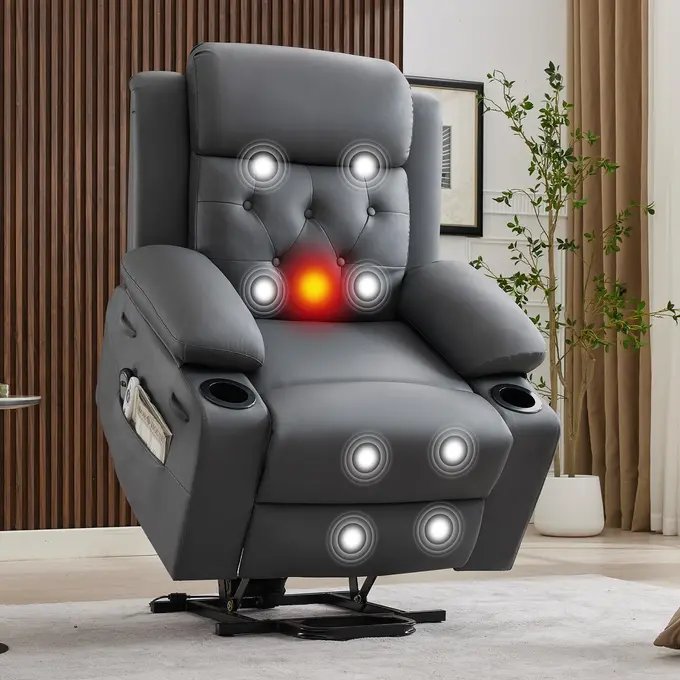
Most homes aren't built for changing bodies — but small furniture choices dramatically reduce fall risk and daily strain. These are the ten features our occupational therapy advisors insist on for senior-friendly rooms.
Standing & sitting safely
1. Seat height of 19–21 inches. Standard sofas sit at 17–18 inches, which forces a deep knee bend. Firm cushions at 19+ inches let you stand with far less effort.
2. Power lift assistance. A lift recliner like our CloudRest raises and tilts you to a near-standing position at the touch of a large, backlit button — no pulling on armrests.
3. Firm, supportive edges. Soft, rounded front edges feel nice but collapse under you. Look for foam that compresses less than 2 inches when you first sit.
Reaching & using
4. Large-button remotes. If you need reading glasses to press it, it's too small. Every powered piece we sell uses remotes with buttons at least 3/4 inch wide.
5. Full-extension drawers. Ball-bearing glides that open 100% mean no leaning over to reach the back — a common cause of dresser tip-overs.
6. Foot-switch lighting. Floor lamps with a weighted base and a foot pedal eliminate bending and reaching behind furniture.
Materials & maintenance
7. Easy-clean upholstery. Performance fabrics and microfiber wipe clean in seconds — important when spills happen and reaction time is slower.
8. Rounded corners. Coffee tables and dressers with softened edges turn a stumble into a bruise instead of a stitches visit.
9. Anti-tip anchoring. Every tall piece should ship with a wall-anchor kit. Ours do, with large-print instructions and a video QR code.
10. Contrasting colors. A seat that's a different color than the floor is easier to see and aim for — a detail researchers link with fewer missed-seat falls.
Browse our Senior Comfort collection to see these features applied — every product page lists seat heights and effort ratings in plain English.
Ready to furnish smarter?
Explore senior-friendly, designer-approved furniture with free US shipping.
Shop the Collection